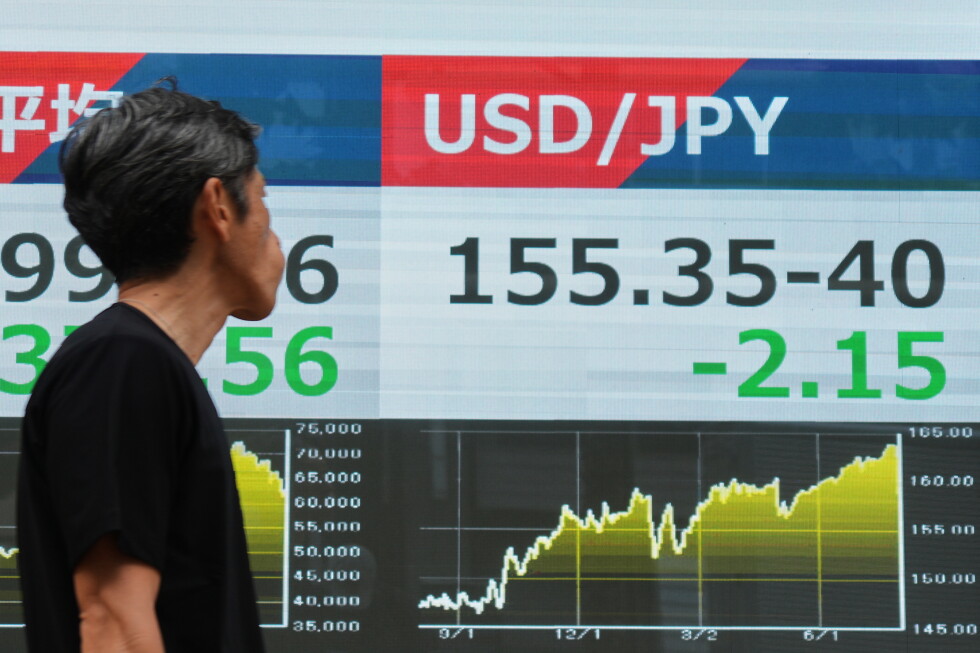
A wave of anxiety regarding the long term profitability of artificial intelligence has sent shockwaves through global financial markets, triggering sharp declines for semiconductor giants across the United States and Asia. The volatility reached a fever pitch in South Korea, where the benchmark Kospi index plummeted more than ten percent on Tuesday. Trading had to be temporarily suspended as circuit breakers kicked in to curb panic selling, while industry heavyweights Samsung Electronics and SK Hynix both saw their valuations dive by over thirteen percent.
The contagion appears to have started on Wall Street, where AI powerhouse Nvidia suffered a five percent drop on Monday. This slide stripped Nvidia of its title as the world’s most valuable listed company, handing the crown back to Apple. Market analysts suggest the downturn was sparked by reports that Nvidia is negotiating a massive two hundred and fifty billion dollar deal with OpenAI for a new data center project. While such growth sounds promising, many investors are beginning to question whether the astronomical sums being poured into AI infrastructure will ever yield an actual return on investment.
This shift in sentiment has made traditional tech players like Apple look more attractive precisely because they have remained relatively distanced from the high stakes arms race of AI spending. In Japan, the tech dominated Nikkei 225 followed suit, closing nearly four percent lower as traders took profits following months of phenomenal gains. Some experts note that the crash was intensified in Korea due to a high volume of margin trading, where investors use debt to buy stocks, effectively amplifying losses during a correction.
Despite the turmoil in Western and Japanese markets, not everyone is retreating from the sector. In China, memory chip maker ChangXin Memory Technologies saw its shares soar nearly four hundred and seventy percent during its Shanghai debut on Monday, signaling continued aggressive expansion within Chinese borders. Meanwhile, European indices largely ignored the drama on Tuesday morning, remaining stable thanks to their significantly lower exposure to the volatile AI trade compared to their counterparts in New York and Seoul.