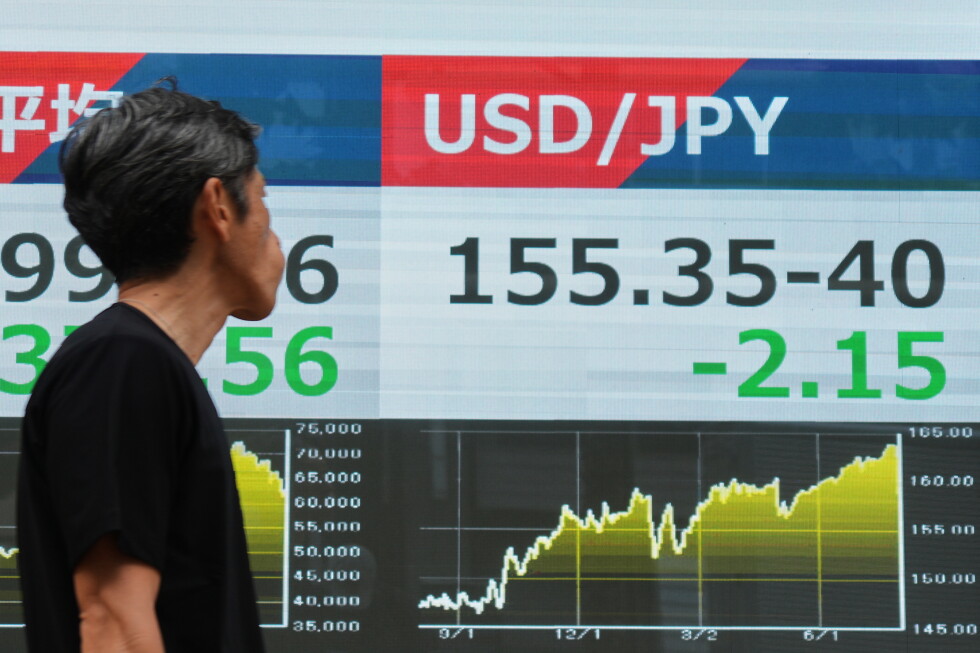
The U.S. dollar weakened sharply against the Japanese yen on Monday after both Washington and Tokyo confirmed they had jointly intervened in currency markets, a rare coordinated move that sent the dollar tumbling from near 40-year highs. Just last week the dollar was trading above 163 yen before suspicions emerged that regulators were stepping in. After President Donald Trump and Japanese Finance Minister Satsuki Katayama publicly acknowledged the intervention over the weekend, the dollar dropped to around 155.20 yen early Monday before settling near 156.70 yen by early morning Eastern time.
The yen’s prolonged slide has been a growing headache for Tokyo, even as it has drawn waves of bargain-hunting tourists to Japan. Because the country imports so much of what it consumes, a weak currency has pushed prices higher at home, a problem made worse by surging oil costs. That has put real pressure on Prime Minister Sanae Takaichi’s administration to address a rising cost of living that is squeezing households. Earlier efforts this year to prop up the yen barely moved the needle, largely because a substantial gap between U.S. and Japanese interest rates has kept investors selling yen in favor of higher-yielding dollar-denominated assets. Both the Bank of Japan and the Federal Reserve held rates steady at meetings last week, leaving that gap firmly intact.
Trump said Sunday that Washington agreed to help because of the close relationship between the two nations, calling the intervention a signal of friendship that also carried financial benefits for the United States. A weaker dollar makes American goods more competitive by reducing their cost in yen terms, potentially giving U.S. exports a boost in the Japanese market. Analysts noted that such overt coordination between the two governments is exceedingly rare, with the last major example coming after the 2011 earthquake and tsunami disaster. Neil Newman of Astris Advisory Japan pointed out that there is a genuine alignment of interests here, making cooperation mutually beneficial rather than purely symbolic.
Whether the intervention will have staying power remains an open question. Shigeto Nagai of Oxford Economics suggested the latest move appears more durable than earlier attempts this year and could give the yen a slightly stronger trajectory in the months ahead. But he cautioned that the underlying forces driving the yen lower are still very much in place, including Japan’s heavy energy import burden and an interest rate gap that remains wide despite incremental hikes from the Bank of Japan. With inflation fueled by elevated oil prices keeping the Fed cautious about cutting rates, Stephen Innes of SPI Asset Management observed that the central bank is still moving too slowly for markets to expect a sustained reversal anytime soon.