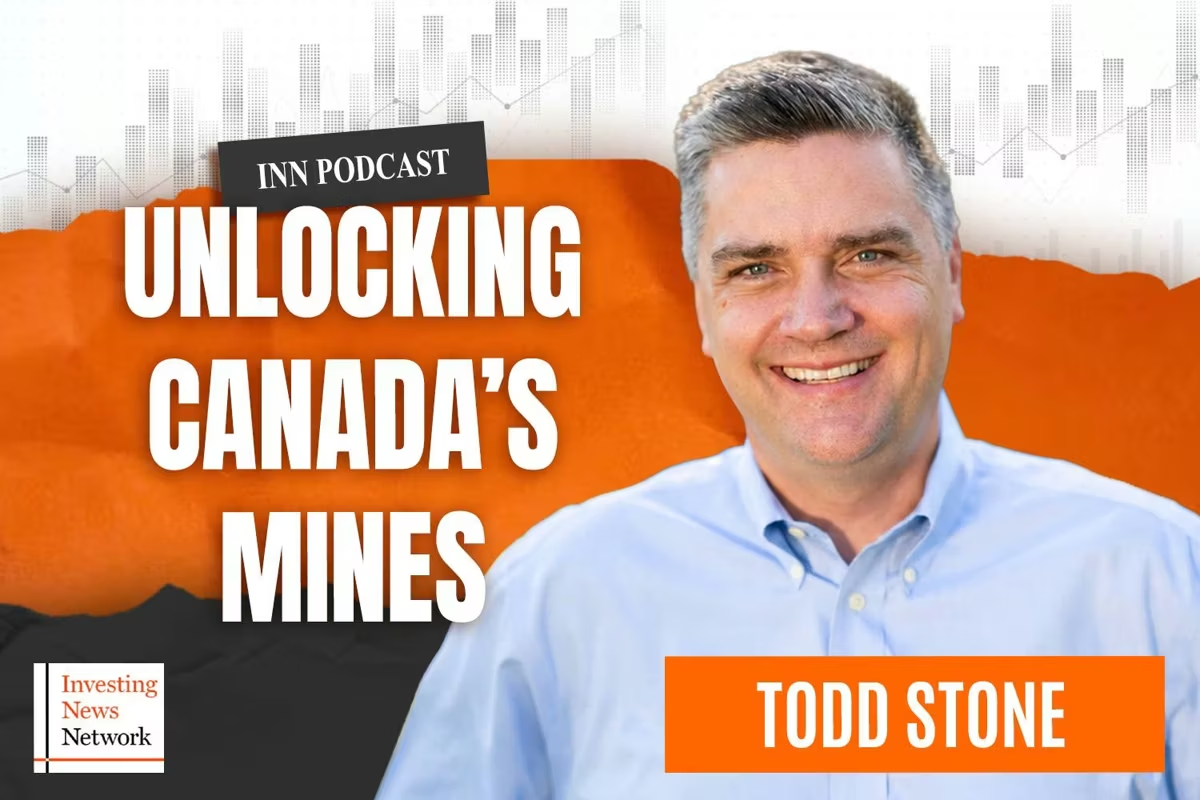
Canada is making aggressive strides to secure its critical mineral supply chains, but industry leaders warn that the nation may be overlooking a dangerous gap in its strategy. Todd Stone, the president and CEO of the Association for Mineral Exploration, suggests that Ottawa is focusing too much on projects already nearing completion while ignoring the precarious stage where many promising discoveries wither away. This phenomenon, known as the Valley of Death, occurs when exploration companies struggle to raise the massive amounts of capital needed to transition a find into an economically viable mine.
To bridge this divide, Stone is urging the federal government to expand the Canadian Exploration Expense tax credit. Currently, there are around 171 advanced critical mineral projects across Canada that are moving forward slowly but risk stalling without better financial support. By expanding the credit to cover technical feasibility and engineering costs, Stone argues that Canada could significantly de-risk these investments and attract more private capital through flow-through financing. He believes such a move could provide a ten to twenty fold return for the government via increased employment and long term tax revenue.
The push for reform has gathered significant momentum, with nearly ninety companies and various provincial governments now backing the initiative. While Stone acknowledges that tax credits alone cannot fix everything, he notes that they are among the most immediate tools available to policymakers. Other systemic hurdles like slow permitting processes, aging infrastructure, and a shortage of skilled workers still pose threats to growth, but solving the funding gap is seen as a priority for maintaining global competitiveness.
Ultimately, Stone views this shift as essential if Canada hopes to evolve into a true critical minerals superpower for decades rather than just a few short years. As major mining firms hunt for new deposits and international competition intensifies, he insists that looking beyond current developments is necessary to ensure a steady pipeline of resources. Without addressing the needs of those early stage projects today, Canada risks missing out on its own geological potential tomorrow.